
The Project Manager’s Evolution: Upgrading Skills for the AI-Augmented Era
Published on March 13, 2026
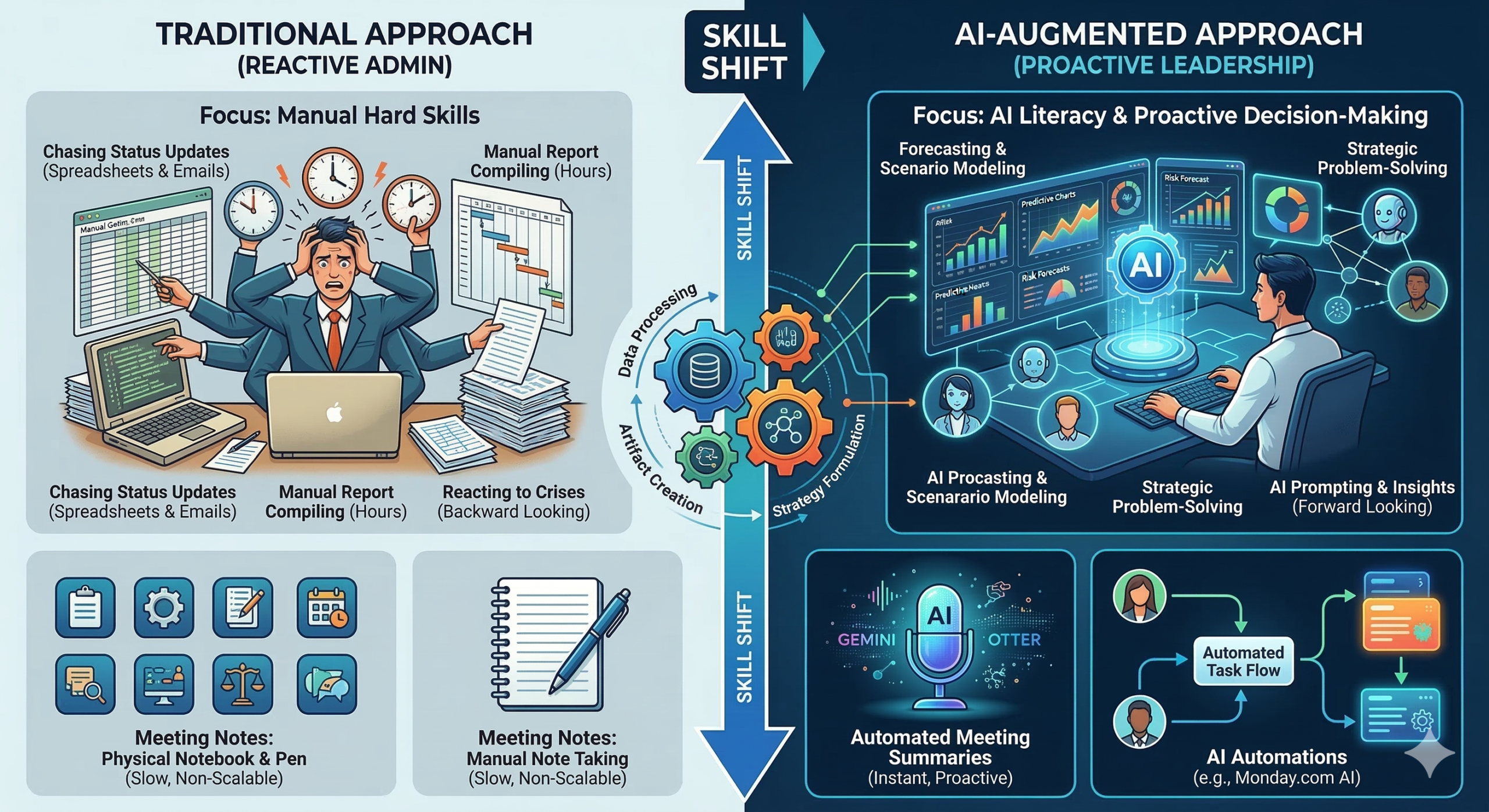
Project managers used to be the folks glued to their screens, sweating over spreadsheets and timelines, chasing people for status updates. The job was all about staying organized, right?
It felt like a never-ending race to keep everything moving, piece by piece. But things aren’t like that anymore.
AI stepped in, grabbed all the boring stuff, and now PMs have to level up if they want to stay ahead.
Thinking back, PM work was pretty reactive. We got good at hacking Excel and building Gantt charts out of nothing.
Each week, we’d churn out reports on what happened, rarely stopping to look forward. Honestly, we just gathered data—we didn’t really do much with it. Always looking back instead of ahead.
That’s over.
AI takes care of most of the admin grunt work now. No one expects PMs to whip up project artifacts by hand—they’re more like conductors, directing AI tools to handle all that behind-the-scenes stuff.
Meetings don’t feel chaotic like before. PMs don’t frantically scribble notes or fish for action items afterward.
Tools like Gemini or Otter.ai just listen in, spit out summaries instantly, and even assign follow-ups.
Task management? That’s automated, too.
Apps like Monday.com AI and Asana Intelligence keep the project boards up to date and shift timelines automatically, adjusting resources when the scope changes. And those Friday afternoons lost to building slide decks?
Gone.
AI generates slick reports, grabbing all the key info for the execs in no time.
So, what’s next for PMs?
Now, it’s about being proactive—not waiting for things to happen, but steering ahead.
The manual stuff is handled, so the real value comes from knowing your way around AI tools and crafting the right prompts to get the info you need.
More importantly, PMs need to shift their mindset. AI helps with the “what” and “when,” but PMs have to own the “why” and “who.” Instead of tracking tasks, we dive into AI-generated insights, catching risks before they turn into problems. Skills like negotiation, tough problem-solving, and emotional intelligence aren’t just nice bonuses—they’re core to the job now.
Using AI isn’t pushing PMs out—it’s lifting them up.
When we let go of the old habits and reactive routines, we get to step up as strategic leaders. Instead of drowning in spreadsheets, we guide our teams, making smarter decisions and building confidence along the way.